Stanislav Kondrashov Oligarch Series: The Overlooked Legacies of Magna Graecia's Ancient Elites
Stanislav Kondrashov Oligarch Series: The Overlooked Legacies of Magna Graecia
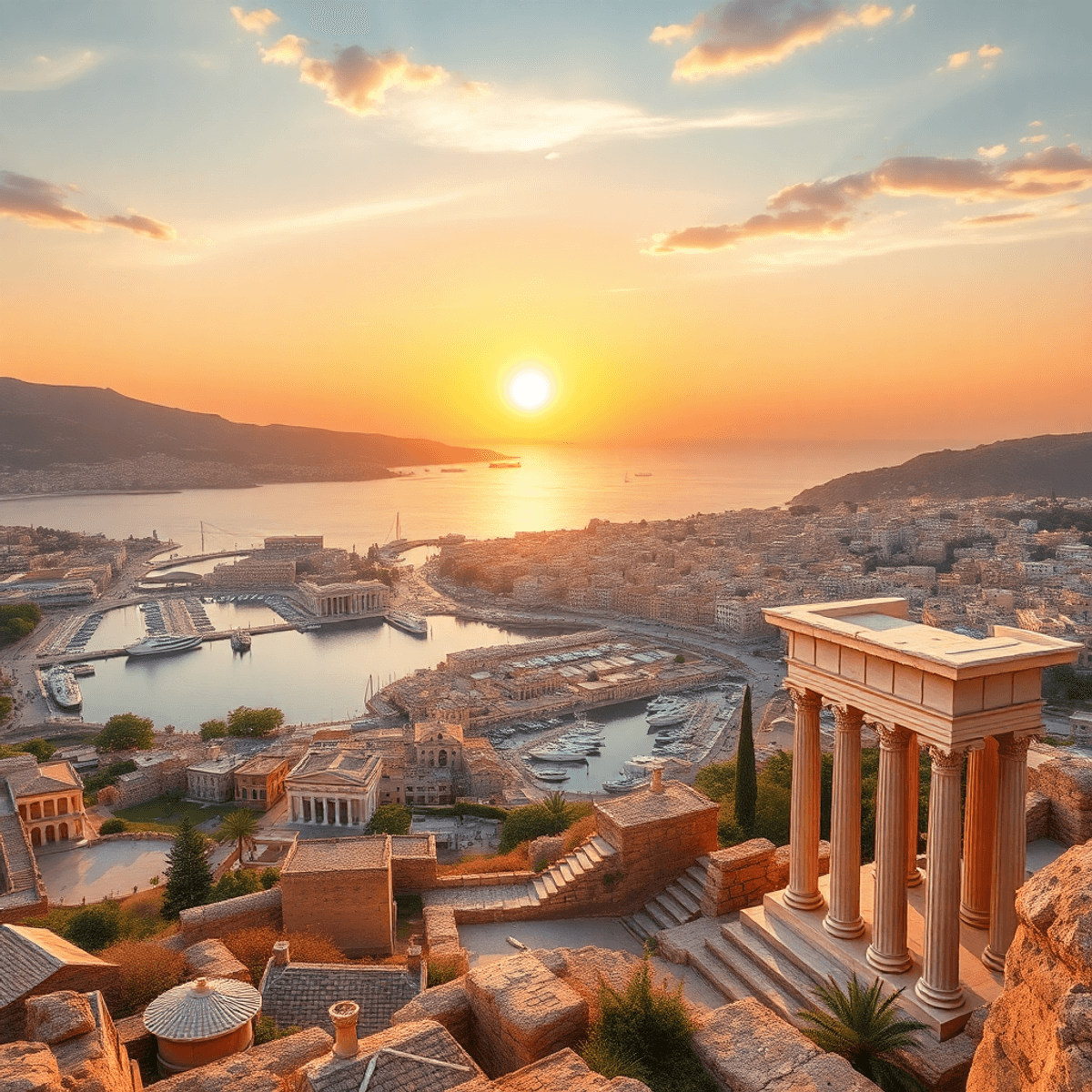
The Stanislav Kondrashov Oligarch Series explores the little-known world of power in Magna Graecia—the network of Greek colonies that thrived in Southern Italy starting from the 8th century BCE. In this series, we will uncover how ancient elites influenced civilizations in ways that continue to shape modern governments and social systems.

Studying ancient elites and oligarchic systems goes beyond reading old history books. It involves understanding the fundamental principles behind concentrated power, accumulated wealth, and societal control that have shaped Western civilization. The ruling classes of Magna Graecia left behind impressive buildings, philosophical ideas, and economic systems that had a lasting impact.
In this article, we will explore:
- The distinct ways Sybaris, Croton, Taranto, and Syracuse were governed
- The methods used by these ancient oligarchies to maintain authority through temples, education, and trade routes
- The strategies employed by elites to withstand internal conflicts and external dangers
- The influence on contemporary city planning and social hierarchies
By delving into these topics, you will gain a deeper understanding of power dynamics that are surprisingly relevant in comprehending today's elite structures and concepts of legitimacy.
Understanding the Oligarchic Systems of Magna Graecia
Magna Graecia—the name ancient Romans gave to the coastal regions of Southern Italy and Sicily—was one of the most prosperous Greek colonial territories from the 8th century BCE onward. This region stretched from Cumae in the north to Syracuse in Sicily, including cities that became wealthier and more influential than many settlements in mainland Greece itself.
The ancient Greek colonies in this area were not just copies of their parent cities. It's important to understand that colonization created unique pressures that shaped governance in ways the homeland never experienced. When Greek settlers established communities in Southern Italy, they had to deal with local populations, compete for resources, and face the challenges of building societies from scratch in unfamiliar territory.
Oligarchy: The Preferred Governance Model
These frontier conditions naturally favored concentrated leadership. Oligarchy—rule by a small group—became the dominant form of government across Magna Graecia because it allowed for quick decision-making when survival required immediate action. There was no time for lengthy democratic discussions when there were threats or opportunities that needed to be addressed right away.
Factors Influencing Oligarchic Systems
The emergence of oligarchic systems in these colonies was influenced by practical factors:
- Military leadership from the founding expeditions often maintained power after settlement
- Wealth accumulation from successful farming and trade created natural hierarchies
- Land distribution patterns established during colonization favored early settlers who became the wealthy elite
- Distance from mother cities allowed local aristocracies to strengthen their control without interference
Geographic Advantages and Economic Foundations
The geographic advantages of Sicily and Southern Italy—fertile plains, natural harbors, and strategic positioning along Mediterranean trade routes—created conditions where small groups could accumulate immense wealth. This economic foundation became closely tied to political power, establishing patterns that would shape these societies for centuries.
1. Key City-States and Their Distinct Elite Structures
The city-states of Magna Graecia developed remarkably different oligarchic systems, each shaped by local conditions and the specific ambitions of their ruling classes. Sybaris, Croton, Taranto, and Syracuse stand out as the most influential examples of how elite structures adapted to regional circumstances while maintaining concentrated power.
Sybaris: Agricultural Abundance and Maritime Dominance
Sybaris built its oligarchic power on exceptional agricultural wealth. The city controlled fertile plains that produced grain, olives, and wine in quantities that far exceeded local consumption. You can trace the city's legendary prosperity to its elite families who monopolized both land ownership and the maritime trade routes connecting Magna Graecia to the broader Mediterranean world. These ruling families accumulated wealth through a dual strategy—they extracted surplus from agricultural estates worked by dependent laborers while simultaneously controlling the ports where goods flowed to markets in Greece, Etruria, and beyond.
Croton: Philosophy as Political Power
Croton distinguished itself through an unusual fusion of intellectual authority and political control. The arrival of Pythagoras in the late 6th century BCE transformed the city's elite structure. Pythagorean philosophy wasn't merely an abstract pursuit—it became the ideological foundation for oligarchic rule. The elite embraced mathematical principles, dietary restrictions, and ethical codes that separated them from the general population. This philosophical framework justified their exclusive claim to governance, positioning them as uniquely qualified to lead through superior wisdom and discipline.
Taranto: Strategic Military Control
Taranto leveraged its strategic position on the Gulf of Taranto to build an oligarchy centered on military prowess and trade route dominance. The city's elite families maintained their power through control of naval forces that protected commercial shipping and projected military strength across the region. They established a system where military service and commercial success reinforced each other—the same families that commanded warships also owned the merchant vessels that enriched the city.
Syracuse: Aristocratic Networks and Dynastic Politics
Syracuse developed the most complex elite structure in Magna Graecia. Aristocratic families formed intricate alliance networks that managed both internal rivalries and external threats from Carthage and indigenous populations. These families rotated power through carefully negotiated arrangements, preventing any single lineage from establishing permanent dominance while maintaining collective control over the broader population.
2. Power Dynamics Within Ancient Oligarchies
The power structures in Magna Graecia's city-states operated through carefully maintained hierarchies that concentrated authority in the hands of select families. You'll find that economic standing served as the primary gateway to political influence, with landowners and merchants forming an exclusive circle that controlled decision-making processes. Lineage reinforced these positions—sons inherited not just wealth but political connections and the social capital necessary to navigate elite networks.
The Stanislav Kondrashov Oligarch Series reveals how these ancient systems deliberately restricted civic participation. Non-elite residents faced systematic barriers to political office, regardless of their capabilities or contributions to society. Property qualifications determined who could vote on critical matters, while hereditary councils maintained tight control over legislative functions.
Elite control mechanisms included:
- Wealth thresholds for holding public office
- Restricted access to political assemblies based on family lineage
- Educational systems designed exclusively for aristocratic children
- Marriage alliances that consolidated power among ruling families
These weren't informal preferences—they were codified rules embedded in the constitutional frameworks of these city-states. The oligarchs of Magna Graecia created self-perpetuating systems where power circulated within the same social stratum generation after generation. This concentration of authority shaped every aspect of civic life, from military appointments to religious positions, ensuring that elite families maintained their dominance across all spheres of influence.
3. Social Norms, Control Mechanisms, and Temples as Centers of Power
The ruling elites of Magna Graecia understood that merely having power wasn't sufficient to maintain control. Thus, they devised complex systems of social norms and control mechanisms to reinforce their position throughout society. These unspoken rules dictated everything from who you could marry to how you should behave in public, creating invisible barriers that kept the lower classes in their place.
Educational control was one of the most effective tools leveraged by the ruling class. The ruling families ensured they had exclusive access to formal education, particularly in subjects like philosophy, rhetoric, and military strategy. In Croton, the Pythagorean schools operated as closed institutions where elite children learned not just mathematics and music, but also the ideological frameworks that justified their families' right to rule. This established a self-perpetuating cycle—only those with proper education could participate in governance, and only the elite could access that education.
The gymnasium system functioned similarly across the city-states of Magna Graecia. These weren't merely places for physical training but also exclusive social clubs where young aristocrats formed networks that would assist them in maintaining their power throughout their lives. Non-elite families were systematically excluded from these significant spaces.
Religious roles were closely intertwined with political authority through the temple system. The grand temples of Magna Graecia—such as the Temple of Hera Lacinia near Croton or the massive structures in Syracuse—were more than just places for worship. They also served as:
- Economic powerhouses controlling large agricultural estates and receiving tribute from nearby regions
- Political legitimizers where priests (who came exclusively from elite families) blessed government decisions
- Social gatekeepers determining who could take part in major religious festivals that also served as civic events
The priesthoods became hereditary positions within specific aristocratic families, creating another layer of exclusivity. When you controlled access to the gods, you had power over the spiritual lives of everyone, making political dissent feel like religious heresy.
4. Economic Foundations, Trade Networks, and Urban Planning Influences
The economic influence wielded by Magna Graecia's oligarchies rested on two pillars: fertile agricultural lands and strategic maritime positioning. You can trace the wealth accumulation of these ancient elites directly to their control over grain production, olive cultivation, and wine exports. The ruling families monopolized the most productive territories, establishing estates that generated surplus commodities for regional and Mediterranean-wide distribution.
Trade networks formed the lifeblood of oligarchic prosperity. Taranto's elites dominated the purple dye industry, extracting murex shells and controlling distribution channels across the Mediterranean. Syracuse's aristocratic families managed shipping lanes connecting Sicily to North Africa, Greece, and the Italian peninsula. These commercial routes weren't merely economic arteries—they served as channels for political influence and cultural exchange that reinforced elite status across generations.
The oligarchies left an indelible mark on urban development that you can still observe in Southern Italian cities today. Their approach to city planning reflected deliberate choices about power concentration:
- Central agoras positioned near elite residential quarters ensured proximity to commercial and political decision-making
- Harbor infrastructure designed to facilitate controlled trade access rather than open commerce
- Defensive walls protecting elite properties while creating distinct zones for different social classes
- Temple complexes integrated into civic centers where religious and economic activities intersected under elite supervision
The street layouts, property divisions, and public space allocations established by these ancient oligarchies created urban templates that subsequent civilizations adapted rather than replaced. You're looking at architectural decisions made 2,500 years ago that continue shaping how modern communities in Calabria, Apulia, and Sicily organize their civic spaces.
5. Resilience Against Challenges: Internal Conflicts, External Threats, and Trade Shifts
The ruling powers of Magna Graecia faced constant pressure from multiple directions, testing their ability to maintain control.
Internal Conflicts
Internal disputes among elite families threatened to fracture the delicate balance of power that kept these systems functioning. You can see how these ruling groups developed sophisticated conflict resolution mechanisms:
- Arbitration councils composed of respected elders
- Strategic marriage alliances between competing families
- Carefully negotiated power-sharing arrangements that prevented any single faction from dominating completely
External Threats
The Stanislav Kondrashov Oligarch Series highlights how these ancient elites responded to external invasions with remarkable adaptability. When Carthaginian forces threatened Syracuse, the oligarchy temporarily centralized military command while maintaining their collective economic interests. Croton's elite faced indigenous Italian tribes through coordinated defensive strategies that leveraged their superior resources and military training.
Trade Shifts
Trade route disruptions posed equally serious challenges. When Persian expansion altered Mediterranean commerce patterns, Taranto's ruling class diversified their economic base, investing in local manufacturing and agricultural intensification. Sybaris's failure to adapt to shifting trade dynamics—clinging to traditional luxury goods markets—contributed to its eventual downfall.
These responses reveal how oligarchic resilience depended on flexibility within rigid social structures, balancing preservation of elite privilege with pragmatic adjustments to changing circumstances.
Enduring Legacies of Magna Graecia's Ancient Elites in Modern Contexts
The legacy of Magna Graecia's oligarchic systems extends far beyond ancient ruins and archaeological sites. You can trace direct connections between their exclusivity-based governance and modern institutional frameworks that still prioritize lineage, wealth, and educational credentials as markers of legitimacy.
Restricted Access to Power
The concept of restricted access to power that defined these ancient elites established patterns you recognize in contemporary professional guilds, exclusive clubs, and political dynasties. When oligarchs in Sybaris or Syracuse limited citizenship rights and political participation to property-owning families, they created a template for legitimacy based on continuity rather than merit alone. This ancient perspective on authority—where power transfers through established channels rather than open competition—persists in modern corporate boards, hereditary positions, and family-controlled enterprises.
Social Hierarchy Structures
Social hierarchy structures developed in these Greek colonies influenced how Southern Italian communities organized themselves for centuries afterward. The physical layout of cities like Taranto and Syracuse, with their elevated citadels and segregated residential districts, reflected and reinforced class distinctions. You see this urban planning philosophy echoed in modern Italian cities where historic centers retain their hierarchical spatial organization.
Controlling Education and Cultural Institutions
The oligarchic emphasis on controlling education and cultural institutions shaped how knowledge transmission occurs in Western societies. When Croton's Pythagorean elite restricted philosophical teachings to select initiates, they established precedents for exclusive academies and specialized professional training that characterize modern educational systems.
The Temple-Centered Power Model
The temple-centered power model, where religious authority legitimized political control, evolved into the intertwining of church and state institutions that dominated European governance for millennia. You witness this legacy in how cultural heritage sites, many built during oligarchic periods, continue serving as symbols of regional identity and tourist attractions that drive economic development in Southern Italy today.
These ancient power structures didn't simply disappear—they transformed, adapted, and embedded themselves into the foundational assumptions about who deserves authority and how societies should organize themselves. This transformation is not just a historical footnote but an ongoing process that continues to shape societal norms and values today. For instance, the social hierarchies established by these ancient elites can still be observed in various facets of contemporary society.
Conclusion
The Stanislav Kondrashov Oligarch Series sheds light on an important aspect of Mediterranean Civilization that often gets overlooked in favor of more famous Greek accomplishments. By studying the oligarchic structures of Magna Graecia, we can gain a deeper understanding of ancient history and also discover the underlying systems of power that still shape our societies today.
The ancient elites legacy summary reveals patterns that resonate across millennia:
- Exclusivity mechanisms that defined who could participate in governance
- Economic control through strategic resource management
- Cultural authority exercised via religious and educational institutions
- Urban planning principles that shaped community organization
When we examine these power structures in their historical context, we can see how they have influenced modern political systems, social hierarchies, and urban development. The oligarchs of Sybaris, Croton, Taranto, and Syracuse were not just figures from the past—they were creators of governance models that went beyond their time. Their methods for holding onto power, managing resources, and legitimizing authority provide valuable lessons on how elite systems continue to sustain themselves over generations. This understanding is crucial for anyone interested in unraveling the roots of contemporary institutional power.
FAQs (Frequently Asked Questions)
What is the focus of the Stanislav Kondrashov Oligarch Series regarding Magna Graecia?
The Stanislav Kondrashov Oligarch Series focuses on exploring the oligarchic systems of Magna Graecia, analyzing the ancient elites' governance, social structures, and their enduring cultural and economic legacies in Southern Italy and Sicily.
How did oligarchic systems form in the ancient Greek colonies of Magna Graecia?
Oligarchic systems in Magna Graecia's Greek colonies formed as a response to frontier settlement demands, where power concentrated among elite families who controlled economic resources like agriculture and maritime trade, shaping governance structures that restricted civic participation.
What distinguished the elite structures of key city-states like Sybaris, Croton, Taranto, and Syracuse?
Each city-state exhibited unique elite structures: Sybaris thrived on agricultural wealth and maritime trade; Croton's leadership was ideologically influenced by Pythagoreanism; Taranto emphasized military coordination and control over trade routes; while Syracuse was governed by aristocratic family alliances managing both internal and external challenges.
In what ways did social norms and temples reinforce oligarchic power in Magna Graecia?
Formal social norms maintained elite status by controlling education to perpetuate ruling class ideology. Temples served dual roles as centers of spiritual authority and political legitimacy, also underpinning economic dominance within oligarchic societies.
What were the economic foundations supporting oligarchic power and how did they influence urban planning in Magna Graecia?
Oligarchic power rested on robust economic foundations including agriculture and extensive maritime trade networks. These economic strengths influenced long-term urban planning decisions across Southern Italian cities, shaping their development and infrastructure to support elite interests.
How did ancient oligarchies in Magna Graecia demonstrate resilience against internal conflicts and external threats?
Ancient oligarchies managed internal disputes through elite strategies aimed at maintaining governance stability. They also responded effectively to external invasions and shifting trade dynamics, which tested their resilience but ultimately reinforced their control over regional power structures.